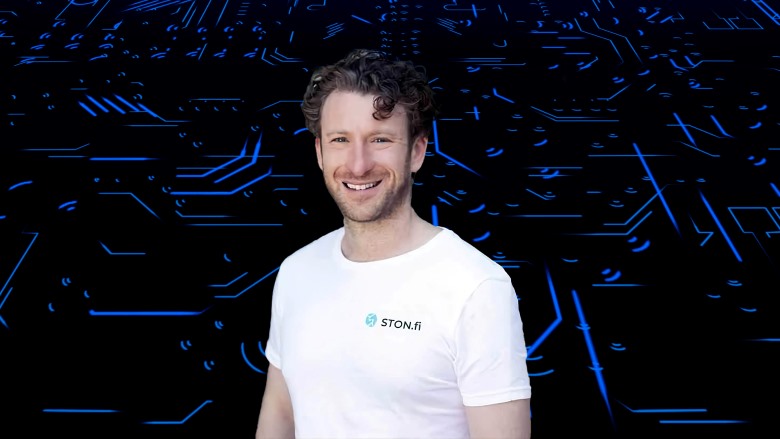
Martin Maser, head of growth at the TON Foundation, says that once people see what's truly possible on Telegram, everything changes.
The open network TON has rapidly evolved from a blockchain-based pilot project into a burgeoning ecosystem integrated with Telegram. With its integrated wallets, payments, and microapps, TON's daily activity has skyrocketed, making it one of the few Tier 1 networks directly linked to a major platform.
At the heart of this expansion, Maser explains how TON leverages Telegram's global audience to attract the next generation of cryptocurrency users. "Whenever I give a talk, I ask the audience who uses Telegram, and every hand goes up," he says. "It's powerful—you already have a massive user base and active people who spend time there every day."
For Maser, the appeal is clear: “From this perspective, this network is the logical blockchain for Telegram. The way TON is built—with its focus on sharding and scalability—is ideal. Do you use Telegram? Great. TON is the blockchain of choice for Telegram, and it’s ubiquitous.”
He points out that what’s lacking is awareness. Many users don’t realize the ecosystem is already active. Once they discover it, they’re amazed by how much they can do within Telegram without ever leaving the app—from seamless payments and non-fungible tokens (NFTs) to casual blockchain games and mini-apps.
In the following interview, Maser discusses TON’s unique advantages, developer opportunities, and creative initiatives, including Sera Space, the first community-led space mission accessible through Telegram.
TON's integration with Telegram puts it in a unique position to attract users. What's your take on this?
Martin Maser: Whenever I give talks, I ask the audience who uses Telegram, and hands go up. You can't attend a cryptocurrency conference and find someone who doesn't use it. That's what makes it so influential—you already have a huge user base and active people who spend time there every day.
It's not just about installing the app; for most users, Telegram is among their top three apps. I conducted this test with journalists, asking them, "Check your phones. What are your top three apps?" and it was always apps like Chrome, Telegram, and X. This shows how important it is in people's digital lives.
From this perspective, this is the logical blockchain for Telegram. The way TON is built—with its focus on sharding and scalability—is a perfect fit. It differs from other blockchains in some ways, and it has its pros and cons, but for me, it's the easiest story in the crypto world to explain: "You use Telegram? Great. TON is Telegram's blockchain of choice, and it's integrated everywhere."
What we lack is awareness. People often don't even realize it exists. Once they do, they're amazed at how much they can do within Telegram without leaving the app.
Given this lack of awareness, are there any micro-apps or use cases you'd recommend?
Maser: That's always a tricky question. As a member of the organization, I have to be careful not to exclude any project. The last time I mentioned a project I liked, some people said I shouldn't show my preference for any project. [Laughs] But I'll give a few examples anyway.
If you're into gaming, there are plenty of options available. You have Goat Gaming, Dropy, and TON Battlegrounds, a first-person shooter designed as a mini-app. It loads directly within Telegram—no downloads or setup required. You can play a few rounds and move on with your day.
There’s also Sixers Cricket, which looks fantastic. Interestingly, the developers have begun exploring how to integrate Telegram’s social ecosystem with blockchain features like non-fungible tokens (NFTs). This is similar to casual Facebook games like FarmVille—you could play for a few minutes, but now the gameplay is available on the blockchain.
The main difference is friction. In the old GameFi model, you had to link a wallet, sign transactions, and overcome obstacles—most players quit before even starting. With Telegram, it’s a tap away. Simply link your TON wallet, and you’re ready to play.
Here’s the breakthrough: blockchain games that are as easy and seamless as regular mobile games. You can go from decentralized finance (DeFi) to NFTs to payments, all within a single ecosystem. As an organization, our mission now is to ensure that more people are made aware of the possibilities already available on Telegram.
When it comes to these games, what's the Web3 angle? What's the advantage of having them on TON rather than Facebook or another traditional platform?
Maser: The original idea behind blockchain games was that everything you do in the game would be on the chain—every move and every click. But that's impractical. There's no need to record every little action on the blockchain.
It makes sense to integrate non-fungible tokens (NFTs) and digital collectibles in a meaningful way. For example, projects like Sappy Seals have been incredibly successful in allowing users to use collectibles within the game. You might have Telegram stickers or NFTs that give you an extra level, a new look, or some additional opportunities in the game.
It's about adding value to the digital items that people own and care about. Communities are experimenting with different models—some give away collectibles, some sell them, and some use them for reach or reputation. The point is that these NFTs are making a real difference now.
We have things like Score Suite, which will run a major sticker sale with licensed sports intellectual property rights. They realized that fans would buy digital stickers of famous cricketers, play more matches, and build an economy based on that. That's what excites me—not just any symbols, but symbols that are linked to real interaction and activity.
What about uses other than gaming? What's something people might find really useful but maybe haven't heard of yet?
Maser: I think the most important is sending cryptocurrency instantly via Telegram. You can send USDT or TON directly in the chat. I can now send a message to Alex, type "@push 1 USDT", and send him a dollar instantly.
People use it for simple, real-world things, like splitting a restaurant bill. Someone told me they were in New York, and Revolut and Venmo weren't working, but they both had USDT. I said, "You're both on Telegram, just send the message." It's seamless.
This is a real use case: seamless, cross-border payments. If you're in Croatia and I'm in London, I can send you USDT instantly via Telegram. No middlemen, no fees, no setup hassles.
So all you need to do is deposit some cryptocurrency into your Telegram wallet?
Maser: Exactly. You fund your wallet once, and if someone sends you crypto for the first time, Telegram automatically creates a wallet for you. The wallet may be secure or unsecured, depending on your region, but it's that simple.
After that, you can send or receive USDT, TON (TON), NFTs, and even stake tokens. The idea is to provide users with the basic tools and then let the ecosystem innovate based on them. Once people realize how easy it is, they start imagining new things, like yield tokens that you can send directly through chat. This opens up endless possibilities.
When you talk to developers, what are the biggest benefits of building TON? And what feedback or questions do you get from them?
Maser: The first thing developers notice is how easy it is to connect everything via Telegram. When they contact us, it's usually through Telegram. They're already there—they talk to their users, manage their communities, and run their projects. So, for them, it's about the question: "How can we build something right within the app where everyone is already spending their time?"
That's what makes them so appealing. They have instant reach and spread. You can share a small app in a group chat, and suddenly hundreds or thousands of people are playing or using it within seconds. It's a social, seamless, and viral app.
We've noticed that most of the growth comes through referrals. Someone says, "Hey, try this game," and shares the link, and everyone in the chat joins immediately. I think around 90% or more of new users come through this kind of word-of-mouth.
Of course, there are still some challenges. We need to improve documentation and developer training, and we're working on it. The foundation is updating resources and tutorials to show how to build mini-apps, integrate TON, or launch stickers and collectibles. We don't just want to say, "Here's a billion users—go ahead and build." We need to make sure they have the tools and support they need to succeed.
Another big challenge is awareness. When I speak at events, I ask the audience, "Who uses Telegram?" Every hand goes up. Then I ask, "Who has used a mini-app?" Maybe two or three hands. But when I ask, "Who has played Hamster Kombat?" 70% of people suddenly raise their hands—they don't even realize it's a mini-app.
People think they're just using a web page within Telegram. Once they realize it's a real app experience powered by TON, everything becomes clear. That's why I conduct interviews like this—to bridge this knowledge gap.
Once people understand the overlap between Telegram and TON—what each does and how they integrate—more developers will join. And when good developers join, the ecosystem grows organically. We saw this with NotCoin: it took off, inspired a wave of subsequent projects, and suddenly the entire ecosystem accelerated.
Do you think part of the accessibility issue stems from Telegram's evolution into a "super app"? There's so much going on that it can seem overwhelming. Do you have any thoughts on how Telegram is addressing this?
Maser: Telegram and TON are separate entities, so I can't comment on their internal product development plans. What I can say is that the Telegram team is very aware of how their app is used; they work with it daily.
From what we've seen, their responsiveness to updates is remarkable. They're constantly improving, releasing new features, and experimenting with development quickly. But since we're not the same organization, it wouldn't be appropriate for me to speak for them or speculate on what they'll be working on next.
What are some of the things that excite you, or the wider TON and Telegram ecosystem, right now, from a technical or creative perspective?
Maser: I’m personally very excited about Telegram gifts. What’s really interesting is how entire economies are now being formed because of them. You have marketplaces like TON Market and TON Portal where users can buy, sell, and even rent their gifts.
Once you have this base—unique digital items that people are genuinely interested in—developers start building new levels of functionality. Games integrate them, creators publish them, and users form entire communities around specific collectibles.
This reminds me a bit of the early iPhone era. When the iPhone first launched, real innovation didn’t happen overnight; it came a couple of years later when people started building things that wouldn’t have existed without the iPhone, like Uber. Now, TON and Telegram have reached the same point.
We’re seeing similar effects here. The gift economy is directly linked to games, creators, and marketplaces. One person produces a memorabilia item, another creates a small app around it, and a third develops a way to trade or pawn it. Suddenly, you have this sustainable digital economy operating within Telegram.
Then there’s the creators’ side. Telegram has long been a powerful platform for creators—journalists, influencers, and analysts. They tend to publish on X, but they build communities on Telegram. It’s where their most loyal followers are.
Now, with collectibles, stickers, and payments, these creators can finally monetize directly. I have my own channel, and people can give me Telegram Stars as a token of appreciation or send gifts as a thank you. It’s simple, and it works.
This is something you can’t do on other platforms unless you have a huge following. On Telegram, even smaller creators can start earning right away. They can set up paid messages, offer exclusive collections, or build closed channels with non-fungible tokens (NFTs)—all without ever leaving the app.
You mentioned stickers earlier—how do they fit into this ecosystem?
Maser: Stickers are another great piece. Some are off-chain, but those made through Fuse, Telegram's official sticker store, are printed on-chain using the NFT 2.0 standard.
What's unique about NFT 2.0 is its automated royalty system. In older NFT models, creators had to rely on marketplaces to collect royalties. Here, it's built directly into the code itself. Every time a sticker is traded, the creator gets paid.
This gives artists an incentive to keep their projects vibrant and valuable. Instead of abandoning an art collection once it's gone, they have a financial incentive to continue engaging with their audience and adding new content. This makes the entire system more sustainable for creators.
So, among the stars, gifts, collectibles, and NFT tokens with embedded royalties, you see a truly dynamic and efficient creative economy emerging within Telegram—powered by TON, but accessible to anyone, even those who have never used a blockchain wallet before.
Is there anything else you'd like to add or mention?
Maser: Yes, actually—I'd like to mention the Sierra space program. It's an exciting initiative we're launching that gives people the chance to participate in a real space mission. We have six slots in Blue Origin, five of which are reserved for people from countries that don't usually have the opportunity to participate in space programs—like Nigeria, Brazil, India, and others.
To put things in perspective, Justin Sun reportedly paid $28 million for a slot in Blue Origin. Here, we're opening the door for six community members, chosen through voting on the TON blockchain, using Telegram as the interface.
It's not just symbolic; users will actually be able to vote on experiments conducted in space. We call it a “people’s space program” because it allows global communities to participate directly in something that was previously unattainable.
Even better, it’s not just individuals campaigning alone; communities rally around candidates, mobilize support, and vote together. Imagine a Croatian candidate; the entire Dinamo Zagreb fanbase could support them, send their votes, and perhaps even see their star carry the Croatian flag into space.
This is the kind of global, participatory power that TON and Telegram enable. We’re connecting people across borders, using blockchain technology—not just as a catchy term, but as a real infrastructure for collaboration and access.